
Long overdue but honest Swedish progress post (and why I spend 5x more time with Spanish instead)

The post might as well be called “CONFESSIONS OF A BAD LEARNER” and you’ll understand why in a second. And whether or not you’ll relate, I’m sure we can be friends.
So, it’s been around 3 months since I started learning Swedish, having a) no real practical reason to do so; b) no previous meaningful experience with Scandinavian languages; c) no super specific goals (apart from enrolling in a class about 3 months in).
In these three months, I’ve watched a ton of recommendation videos, and followed a bunch of people on the path of learning a foreign language (both here and on YouTube/Instagram). And while I found most of them entertaining, I noticed some visceral negative reactions to any mention or sight of “dedicated notebook for vocab” or “conjugation tables”. I got dizzy watching a fellow learner write down useful Farsi phrases on a piece of paper. I felt some anxiety learning about a person’s flashcard routine. You get the pattern.
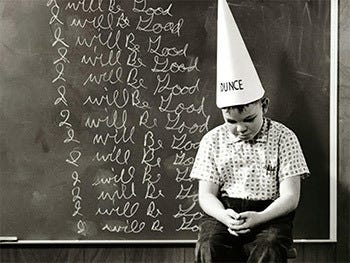
It took some thinking but I reckon now I know the cause of it all.
I really really hated school. I was never a bad student, and I always excelled at humanities and languages, but I often found the learning process tedious, boring and uninspiring. Skipped class quite often, rarely did homework on time. And yes, as a grown man, I still get nightmares where for some unknown reason I’m transported to Year 12 where I have to sit the Chemistry exam.
Progress?
In the three months I’ve:
Listened to a ton of a “Swedish for beginners” type of podcasts, relistening to episodes time after time. I found this the most effective method at this stage for a simple reason. I like it and it doesn’t tire me out. Is it effective in the sense of making progress? While it’s hard to quantify, I can now understand spoken speech more easily and I can follow along better. Episodes I’ve listened to before many times (10 times for a 3-minute episode) I can now understand 80-90%. That doesn’t mean I can talk about the topics discussed in the podcasts, but I didn’t have such a goal anyway. I’d say I spent anywhere between 30 and 60 hours listening, maybe more. It’s also an activity that’s easy to “link” to something I’m doing anyway — walking the dog, running, doing the dishes.
Went through 3 chapters of a Teach Yourself textbook. The book is great but I rarely have the energy and headspace to do traditional studying. Might need to dedicate a weekend morning to it.
Watched 3 episodes of “Love and Anarchy” on Netflix multiple times. Same as with the podcasts, it helped build a better understanding of the spoken language.
Read 2 stories from Olly Richard’s Short Stories in Swedish [mini-review here]. It’s a relatively late addition to my mix, and so far I’m really enjoying it.
I’d say overall I’m happy with my progress but I’m definitely not ready to enroll in a class yet. Maybe in two more months.
Side effect
The side effect of me starting to learn Swedish was this panic that I’d forget Spanish. So… I probably spent around 120 hours engaging in Spanish content (read 2 books, watched dozens of TV episodes, and listened to 10+ hours of podcasts and shows). The panic quickly subsided, but I still signed up for private lessons and I’m continuing with getting more Spanish into my system. I guess it’s just more enjoyable since I’m already pretty advanced? Although my refusal to memorize conjugation tables still leads to some rookie mistakes, other than that I’m pretty happy with my level.
What would have I done differently?
If I had to do the first three months over, I would’ve:
Started with a Michel Thomas course (I didn’t know there was one, but if I had known, I would’ve probably said no to paying $100 for it)
Not spend that much time with Spanish (no regrets though)
Started the No Zero Days approach earlier
Thanks for reading and till next time!
I'm having the same aversion in French. It seems that the way people show themselves learning french is by making conjugation tables and by memorizing them. That does sound like fun to me at all so I've been avoiding doing that and even in using my textbooks. I just want to learn the language as a whole but it leads to me making "basic" mistakes because there are words I forget how to conjugate when I go to speak.
Using the Michel Thomas course and find it so much better than sitting with a traditional textbook.